
TAC Bars, though necessary, are not isolated incidents. They place strain on systems, on teams, and on relationships. That’s why prevention, training, and early intervention matter, not just for the safety of individuals, but for the resilience of the entire operation.
First-hand: Life Behind the Bar — One PWT’s Story
While the mechanics of a restriction are clear-cut, the personal toll is often less visible. We spoke with one PWT-EH who recently experienced a TAC Bar following a serious lapse in procedure. To protect their privacy and prevent identification, we’ve anonymised their story, but their message is one that echoes loudly across the industry.
“The shift started like any other,” he recalls. “But I was tired, I’d had a busy day with my son.”
He completed the paperwork, observed the last train, made the call to the signaller, and proceeded to test at one end of the site. But then, he took a shortcut:
“Instead of walking back and testing properly at the arrival end, I crossed over and tested again where my CRID didn’t flash. I thought it was fine… I let the team onto the track.”
Moments later, another PWT's shout came from down the track, the traction current was still live.
“I got everyone off the track straight away. Then I tested again and realised – the current was still on.”
He reported the incident immediately. A Bar followed soon after.
“When I found out I was restricted, honestly… that was the least of my worries,” he admits. “I was just relieved that everyone was safe. Tickets can be replaced. People can’t.”
Professionally, the consequences were immediate. A clear path toward advancing in his career was paused. The restriction meant returning to general operative duties while the investigation ran its course.
“It hit hard,” he says. “I was hoping to be looking at my next opportunity for upskilling, maybe stepping up into new responsibilities. That’s all on hold now. It’s back to square one, and that’s not easy to swallow.”
Still, there was no attempt to deflect blame. Instead, he spoke openly about the lessons learned, and the reality check that followed.
“If I’d followed the procedure properly, walked the distance, tested correctly, none of this would’ve happened. There are rules for a reason. I cut a corner. One corner. And that was enough.”
His message to others in the industry is unflinching.
“Don’t take shortcuts. They’re never worth it. One mistake can take everything you’ve worked for. Worse still, it could cost someone their life, and you’d have to live with that. Or not. That’s prison. That’s your family. That’s stress you don’t want.”
“I’ve been through it now. It’s a dark place. You lose your confidence. But I’m building back, and if my story stops someone else from making the same mistake, then maybe it was worth sharing.”
Conclusion
A TAC Bar is not just a restriction on a role – it’s a reflection point for the individual, the team, and the wider organisation. It reminds us that even one misstep can have a chain reaction. But it also reinforces why high standards exist: not to punish, but to protect.
The pathway back may be difficult, but for those willing to reflect, take accountability, and rebuild, it’s a journey worth taking. And for everyone still out on track: let this be the reminder to do it by the book – every time. Because when it comes to safety, there are no shortcuts worth taking.
In the rail industry, safety isn’t just a value, it’s a responsibility. For Protecting Workers on Track (PWTs) and Site Persons in Charge (SPCs), that responsibility is felt every night on the London Underground. These safety-critical roles carry a high level of trust, competence, and scrutiny. But what happens when a mistake occurs? What happens when that trust is broken, even momentarily?
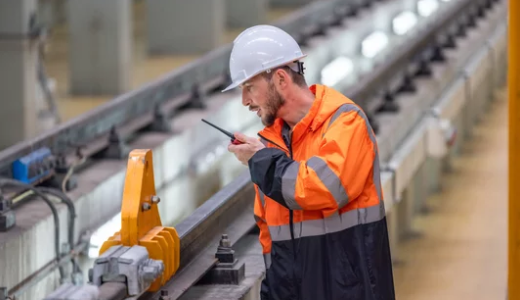
This article explores a subject many operatives know of but few talk about: the TAC Bar – an enforced restriction placed on a PWT operative by the Track Access Controller (TAC) or by the Access and Compliance Teams, when a safety breach or procedural failure occurs. It’s not a disciplinary warning or a job dismissal. But it does change everything.

FEATURE
Behind the Bar: What it really means when a PWT gets restricted
What is a TAC Bar?
The term "TAC Bar" refers to a restriction placed on an operative’s ability to continue to carry out safety-critical duties on the network. It is recorded in the system and enforced immediately, meaning the operative cannot act in any safety-critical capacity (such as PWT-EH) until the matter has been formally reviewed and cleared.
In some cases, restrictions can be procedural – for example, if a competency has expired. But more seriously, a TAC Bar can result from a rule breach, near miss, or incident investigation. These are safety-led decisions, designed to prevent recurrence while protecting both the operative and their colleagues, whilst all parties determine the reason behind the failure and how it can be avoided going forward.
Why Might a PWT Be Restricted?
TAC Bars for PWT-EH roles are generally imposed following:
A failure to follow testing procedures
Allowing a workgroup onto the track without full protection in place
Booking protection incorrectly, or relaying inaccurate details to the TAC
Lapses in identifying or responding to Specified Areas in the NEPA
Repeated procedural failures or evidence of unsafe judgement
The restriction may be temporary, indefinite, or competency specific. The common thread is always risk: when safety or rule compliance is compromised, restrictions follow.
Organisational Impact: When One Restriction Affects the Whole Operation
The impact of a TAC Bar doesn’t stop at the individual, it ripples across the organisation.
When a safety-critical operative is restricted, especially at short notice, the business must act immediately to backfill that role. This often means finding a suitable replacement with the correct familiarity, certification, and competence... no small task!
For the Operations team, the burden is equally significant. Line Managers must rapidly adjust allocations to ensure safe systems of work remain intact. Where a restricted operative can no longer fulfil duties, the remaining team may be at risk if that space isn't filled, we need to keep projects moving without compromising safety.
There’s also the wider contractual picture to consider. Clients like TfL/LUL expect us to uphold competence standards and provide safe, qualified staff on every shift. Replacing a restricted operative isn’t just an internal challenge; it’s a matter of maintaining trust and delivering on our obligations.
TAC Bars, though necessary, are not isolated incidents. They place strain on systems, on teams, and on relationships. That’s why prevention, training, and early intervention matter, not just for the safety of individuals, but for the resilience of the entire operation
HEALTH & WELLBEING
Positive communication skills
All incidents of heat exhaustion or loss of consciousness should be reported via the Information Sharing system as an EIRF.
Morson Rail Newsletter


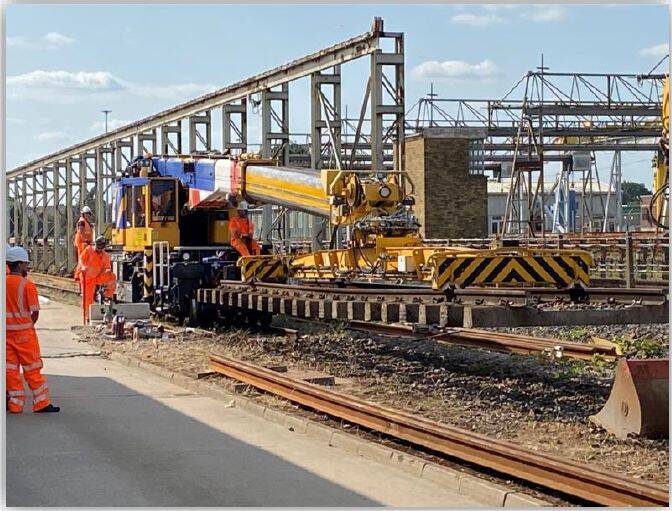
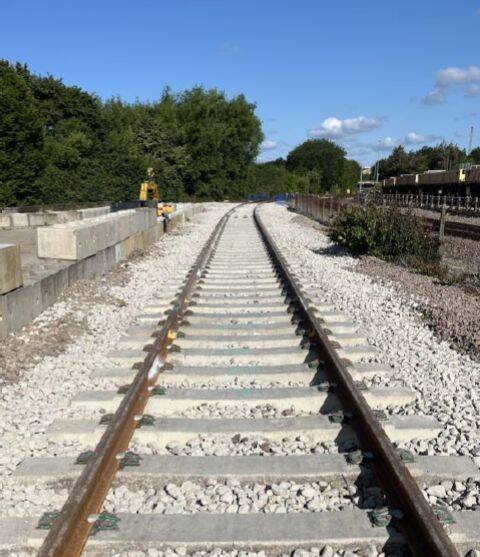
A key part of this job was stress-testing our contingency plans. Midway through the blockade, we required additional skilled labour at short notice. I’d like to thank Chris Humphreys and the team at Morson for responding quickly and diverting labour from a TDU night site to support our day and back shifts. This flexibility was crucial in helping us complete the full planned scope, including 426m of BTR on Rd 61 and 167m BTR with tamping of the existing track on Rd 62.
Thanks again to everyone at Morson for their support on this important milestone.
This strong start under the BTT contract demonstrates not only the effectiveness of our delivery approach but also the value of trusted, responsive partnerships—something we look forward to building on throughout future projects.
NEWS
Ballast Track Tenders framework
Jobs & useful
links
Close calls &
safety
Charity & community
Training & development
For more information, please contact Colin Hewitt, SHE Business Partner
This women’s empowerment event brought together a room full of ambitious, curious, and passionate individuals eager to explore the realities of women’s leadership and the challenges that come with it.
READ MORE
A Woman’s Path to
Leadership

Every June, cities worldwide burst into colour, music, and celebration as millions come together to honour LGBTQ+ Pride. But behind the glitter and parades lies a powerful story of resilience, protest, and progress.
The story of the global LGBTQ+ celebration
Mahesh Sukumaran’s journey from apprentice to full-time trainer is proof that with the right support, real opportunity and relentless dedication, success can be built. It is a story driven by passion, perseverance, and purpose.
Report a close call
How can I report a close call?
There are numerous ways to report:
TfL / RFLI – 0800 092 5995 or use the app https://tfl.info-exchange.com/apps/IncidentsOfflineform
Network Rail / RFLI – As per the Safe Work Pack.
Morson - email: hselondon@morson.com or use the following link: https://www.morson.com/about-us/health-safety-and-sustainability/report-a-close-call
Why should I report a close call?
Watch the short video (first video on the link below) and it will highlight some real life examples of why it is important to reprot close calls:
(The first close call is only 40 seconds long)
https://safety.networkrail.co.uk/safety/close-call/
Questions:
Have you ever walked past something and thought it didn’t look safe?
Have you narrowly avoid an accident?
If Yes. Did you do anything about it?
If No. The next person that comes along could be involved in an accident.
What is a Close Call (Near Miss / Hit)?
A close call is an event that had the potential to cause injury or damage
Have you ever thought:
‘Wow that was close!’
‘That could have really hurt!’
‘I almost tripped over that!’
SAFETY FIRST
If you have any suggestions, safety concerns or content you would like to see in future editions please email getinvolved-london@morson.com or suggestions-london@morson.com
GET IN TOUCH
Useful contacts & links
Jobs & useful links
Morson HSE On-call (24/7)
0207 164 6127
hselondon@morson.com
TfL Incident Report Line
0800 092 5995
Morson Office (Canning Town)
020 3725 8300

Instruction
During this hot weather, it’s important to take steps to stay safe in the heat and look after yourself and others.
Instructions for managers
Review working practices to identify if you can reduce the potential exposure of your team to heat effects, e.g. by replanning work, rotating tasks, regular breaks, etc. where possible. You will know what is practical and possible in your team.
Make sure your team can rehydrate frequently.
Should a colleague feel symptoms of heat stress, they should report it to their manager/supervisor who should respond in line with normal working arrangements.
Information for individuals
Stay hydrated by drinking plenty of water.
Stay cool by adjusting your clothing to prevent overheating, where safe and practical to do so.
Try to stay in the shade and keep out of the sun between 11am to 3pm, when UV rays are strongest and wear sunscreen.
If you feel symptoms of either heat exhaustion or heatstroke, report to your manager/supervisor immediately.
In the event that someone working with you shows symptoms of any of the above, the following actions are recommended:
Lie the person down in a cool area
Get the person to drink water if conscious
Apply a cold/wet compress to the back of their neck
If you suspect heat stroke, CALL AN AMBULANCE immediately, then:
Attempt to cool the person down by placing them in a cooler area
Wrap with wet towels and apply damp sponges
The Met Office have given warning of a potential heatwave with sustained high temperatures over the coming days. More details are available on their website: https://weather.metoffice.gov.uk/learn-about/weather/types-of-weather/temperature/heatwave
Whilst we have extensive operational and engineering contingency plans and arrangements to ensure the safe operation of our services, changes in working practices and daily routines may be required. Those plans ensure that our services and assets are managed in line with our well-established engineering and operational procedures, which are in place to ensure that we continue operate a safe transport system for our customers and our colleagues.
Heat effects on the body
Excessive or prolonged exposure to heat can lead to heat exhaustion or heatstroke when the body’s means of controlling its internal temperature starts to fail.
The body normally reacts to excessive heat by increasing the blood flow to the skin’s surface and by sweating. This cools the body as heat is carried to the surface from within the body by the increased blood flow. Sweat evaporates as a result, except in the case of heatstroke. The different symptoms of Heat Exhaustion and Heatstroke is shown above right.
HEALTH & WELLBEING
Looking after yourself and your colleagues in hot weather
Morson takes equality and diversity seriously (89% answered they agree or strongly agree)
A slight improvement was noted to the response to this question from the last Survey sent (which itself was an improvement on the score from a year earlier). As per our Equality and Diversity Policy, all workers should be judged on merit and all given equal opportunities. If you feel this isn’t the case (an example of this could be training and progression to a new role) then please always do discuss any concerns with your Manager straight away, or if you prefer, another member of the Morson management team.
Site welfare facilities (such as toilets, hand washing etc.) are adequate (82% answered they agree or strongly agree)
A slight increase in positive feedback to this question compared to the last Survey. The best way of improving this situation is reporting specific circumstances of site welfare facilities not being available (raising as a close call using the TfL system, or Morson system, is the best way of raising). We will then highlight this to the client / TfL / NWR / RFLI to address.
If I do a good job, I receive positive feedback (75% answered they agree or strongly agree)
An improvement in positive responses received to this question compared to the last Survey. Where work is identified as above and beyond the expected standard, we will always raise this to the worker, which is often in the form of a certificate / email, but can also be a voucher and potentially also be featured in our Mor News newsletter. We do encourage customers to raise good feedback as well. Please do also raise good feedback yourself, for example if a colleague has done a particularly good job, then Morson know about it, feel free to email: suggestions-london@morson.com
I feel I can raise a mental health / health and wellbeing issue to Morson (86% answered they agree or strongly agree)
A slight improvement in positive responses received to this question compared to the last Survey. Specific Mental Health at Work Support Guidance booklet (please refer to Morson Comply for the copy sent recently). We have also compile specific safety alerts on mental health / health and wellbeing issues. We have over 40 mental health first aiders (MHFA - across the Morson office and on-site. This is an increase of 10 when compared to when the last Survey was sent). If you do have a health and wellbeing concern, we encourage you to discuss with a MHFA (refer to notices displayed in the Morson office and the booklet mentioned above).
Remember – if you do have a health, safety or wellbeing concern, or just have feedback on what we can do better – then it’s always best to raise this straight away to Morson. If we are not aware of specific issues, we cannot do anything about it.
Thanks once again for your hard work and dedication.
Feel free to email Morson on: suggestions-london@morson.com
A Health, Safety and Wellbeing Survey was sent in May 2025 to ask your opinion on 15 Health, Safety and Wellbeing related questions.
The results were analysed after 3 weeks, with a response rate of 85%. Thanks to all who took part. In the majority of cases the responses were positive, in that you ‘agree’ or ‘strongly agree’ with the questions asked (11 of the 15 questions have a 90%+ positive / agree response).
There has been an improvement in positive scores across all 15 questions, when compared to the last Survey sent in October 2023.
The response to 4 of the 15 questions had 10% or more of you state you did not agree on the statements below. As such these are looked at in more detail so we can improve further:
(Note: Where specific comments have been stated on the Survey these have been added to a report, but anonymously and raised with the relevant Morson dept).
HEALTH & WELLBEING
SHEQ Shouts: Health, Safety & Wellbeing survey 2025
NEWS
Blogs & features


Mahesh Sukumaran’s journey
with Morson Training
Despite unexpected challenges, Gang 13 remained professional, proactive and solutions-focused throughout. They consistently demonstrate that they require minimal prompting and show clear initiative on site. On many occasions, the Site Lead has been able to step back and observe the team independently managing operations to a high standard.
Their work ethic, discipline and team cohesion are a credit not only to themselves but to the wider organisation. We are proud to have such a committed group representing Morson & TDU on the ground.
Gang 13 continue to raise the standard, and their performance this week shows exactly why they are trusted to take on complex and demanding tasks.
Morson is proud to have played a vital role in the successful delivery of the first ballast track renewal works under the new Ballast Track Tenders (BTT) framework, operating within the TDU structure. The works at Ruislip Depot represented a significant milestone, not only as the first renewal site under the contract but also as a controlled opportunity to validate the new delivery model.
Our team worked in close collaboration with all stakeholders from the outset, demonstrating flexibility, professionalism, and a clear commitment to quality. The following feedback from our client, Scottie Roberts, Senior Construction Manager at APD Track, highlights Morson’s critical contribution:
The Ruislip Depot works marked our first renewal site under the BTT contract – a key opportunity to test our delivery model in a controlled environment. Morson played a vital role in helping us achieve a successful outcome.
From the outset, Morson committed to supplying the right competencies and worked closely with us during mobilisation. The operatives on site brought a great attitude, worked collaboratively, and contributed directly to the safe and efficient delivery of the works.
NEWS
Gang 13 go above and beyond in the face of difficulty
trains. TDU management were kept fully updated every thirty minutes as milestones were achieved.
Despite working beyond scheduled hours, every member of the team showed outstanding commitment. Their cooperation, dedication and determination ensured the track was handed back safely and on time.
Thursday 17 July – Rapid Adaptation
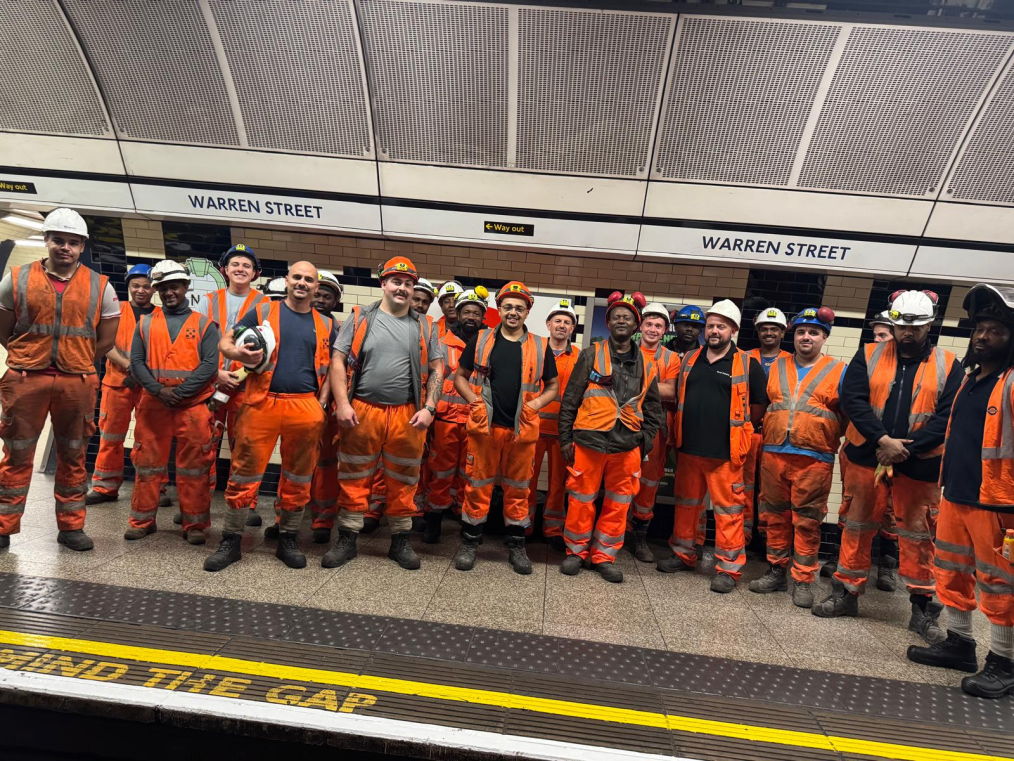
On Thursday 17 July, the team returned to Warren Street Station to install another two hardwood sleepers and set one positive and one negative pot. The site was prepared and running rails lifted, but before breaking could begin, the T/O received a call from the Northern Line signaller reporting a loop failure related to TBTC damage. Work was paused immediately while checks were carried out.
Following discussions with the on-site Construction Manager, it was agreed that signalling would take priority and, having missed two hold points, Gang 13 would instead carry out alternative tasks. These included:
Re-breaking and resetting required positive pots
Moving sleepers from the southbound to the northbound pit
Removing 1.5 tonnes of spoil
Mobilising one tonne of QC10
Assisting Econ in removing two tonnes of rubble from the 13 July shift
The track was reinstated, re-keyed, and walk boards were securely replaced. Once again, the operatives adapted quickly and effectively to the revised plan, completing all alternative works without hesitation or delay.
We are incredibly proud of the resilience, professionalism, and teamwork shown by Gang 13 during a challenging and eventful week of works at Warren Street Station. Their ability to adapt under pressure and maintain the highest safety standards reflects the very best of what we stand for at Morson & TDU.
Sunday 13 July 2025 – Safety First
On Sunday 13 July, the team was scheduled to install two hardwood sleepers along with one positive pot and one negative pot. Work began with the site fully set up and breakout commencing at 01:15. During the breakout on the left-hand rail side, a redundant green braided cable was discovered embedded in the concrete. The cable resembled asbestos-containing cabling typically found on J-hooks in the cable run.
Given the potential risk, the Site Lead made the immediate decision to halt all works and evacuate the team to the platform as a precaution. The area was damped down with water, and a nebuliser was left running to minimise the risk of airborne particles. All tools were secured and the tunnel safely vacated.
The incident was reported to key stakeholders, including Jim Graham, Shenol and Denis, and the Field Response Coordinator was contacted to request urgent air quality monitoring. A 4-Rail analyst was dispatched, alongside an Econ contractor to handle potential asbestos removal.
While waiting for clearance, the Site Lead called an impromptu planning meeting with the PWTs and Handback staff. The team identified alternative productive actions to maximise the available time, including:
Transporting spoil already loaded on the B-type trolley to the platform
Pre-drilling the positive pot and sleepers
Mobilising one tonne of QC10
The spoil was quarantined in a segregated area by Econ due to possible contamination, and the team stayed focused on efficiency without compromising safety.
At 05:30, air test results confirmed safe conditions for work to resume. The team returned to site and completed the sleeper installation, rubble removal, and ensured the track was fully reinstated in time for the first
We do hope you have a nice summer. Remember if you are returning from leave / holiday, then do so safely, including checking you have all of your publications, certificates and equipment and PPE for work.
As always we are more than happy to have your involvement in the company. If there is anything you want to see included in the next edition of the newsletter please do contact us and likewise if you have suggestions for improvements or changes:
Work Safe. Home Safe.
Graham Timbers
Operations Director
Summer is here and so is the next edition of Mor News:
Numerous articles in this newsletter, including:
Behind the Bar – what is means to be barred as a PWT
Hot Weather
Driving Tips
Gang 13 Congratulations
Ruislip Depot
International Women’s Day
And many more articles…
Morson Rail
SPRING/SUMMER NEWSLETTER
Welcome to our latest newsletter

Summer driving tips
HEALTH & WELLBEING
Effective communication is fundamental to creating rapport and trust between colleagues.
What Is Effective Communication? - Communication is a powerful skill. Effective communication isn’t about being clever, or ‘getting your own way’ or being ‘nice’. Effective communication in the workplace is largely about facilitation. Creating an environment to draw out and discuss ideas, thoughts and feelings regarding a particular issue or situation.
The Key To Effective Communication - Effective communication is not about talking the loudest or the most. Effective communication starts with listening.
Active listening will help you to understand a situation and exactly what the other person is saying and will encourage them to share more information.
Some simple tips for effective listening include:
Stop talking! You might be tempted to interrupt but try and wait until the other person has finished saying what they want to say.
Don’t rush to talk. Pausing for a few seconds after others stop talking ensures they have finished.
Use non-verbal signs to show that you are listening. Keep an open posture, maintaining eye-contact and look interested.
Clarify. Ask clarifying questions, repeat back in your own words what has just been said, or summarising what they’ve said so far to double check your understanding.
Concentrate. Communication requires all parties to be engaged with each other.
the other person to speak freely. Use closed questions (those resulting in a yes/no answer) to get specific information or to clarify your understanding.
Be on the lookout for non-verbal signals – do they look tense? Are they speaking more quietly than usual?
Making Your Point - When you have listened carefully, it’s your turn to be listened to. Incorporate the information you have been given when making your response. This will help to reach an agreeable position.
Consider your position. Take a few moments to think about what you’d like to say.
Make one point at a time.
Keep your message as simple as possible.
Keep eye contact and speak slowly and clearly.
Don’t worry about getting it right the first time – keep trying until you get close to what you mean.
Remain calm. If you’re feeling emotional, try not to raise your voice or speed up – take a deep breath or pause for a few minutes to cool down. Otherwise, the conversation is at risk of escalating into an argument.
If you have any questions, concerns, or would like to speak to Morson Talent’s Health and Safety Team directly please email: hselondon@morson.com.
Driving tired
It’s not safe to drive tired. If you do feel tired, stop in a safe place and take a break.
It’s best to avoid getting tired in the first place if you can. Try these tips:
Include a 20-minute break in journeys of more than 3 hours
On longer trips, take a break every couple of hours
Take several short stops (of at least 20 minutes) rather than one long one
Don’t drink alcohol or eat a heavy meal before driving
Pedestrians and cyclists
In warmer weather, you're more likely to encounter cyclists and pedestrians out and about on the roads.
Driving at a safe speed and removing any distractions while driving will help you be aware of your surroundings. This also means you’ll be able to react in time should you encounter vulnerable road users.
Be prepared for an emergency
Download the free what3words app
Ensure you have water for all passengers, including your pets (make sure you have a bowl for pets to drink out of). Also have some snacks on hand in case of a breakdown
Have a first aid kit in your car, as well as mobile phone chargers
Take hats and sun cream in case you breakdown in an area with little or no shade
The holiday season can mean high temperatures, increased stress levels and extra demands on your car so here are our seasonal tips to help with the challenges of summer driving.
Punctures
If your tyres are already damaged or they're at the wrong pressure, the higher temperatures of summer will increase the risk of a blowout. Make sure you check tyres regularly – for condition and pressures and increase pressures to suit extra loads, as advised in your handbook.
Overheating
Cooling systems are under more strain in high temperatures, so issues are more likely to be exposed when it’s hot. It’s important to check the coolant regularly to avoid overheating.
It’s not just the car that can overheat, so it’s important to keep kids, pets and yourself cool in the car in summer. You can do this in the following ways:
Put a sun shield over the back windows – this will help keep the sun off the passengers in the back of the car and will keep some of the heat out
Have iced water in the car – this will help keep all passengers refreshed and hydrated throughout the drive
Use the air conditioning – driving with the A/C on will help keep the internal temperature of the car nice and cool
Try to park in the shade – if you stop along your drive, try to find a shady parking spot to avoid the sun heating up the car
Use a windscreen shade when parked because most of the heat enters the car through the glass
Glare
Dazzle from the sun can reduce visibility, but you can lessen the effect by keeping your windscreen nice and clean. Replace worn or damaged windscreen wipers to keep your screen clear . It also pays to keep a clean pair of sunglasses in your car year-round.

Fatigue has become a pressing concern across industries like rail, logistics, manufacturing, and construction, where demanding conditions are commonplace. But what causes workplace fatigue, and how can occupational health play a role in addressing it?
This article explores the root causes of workplace fatigue, the risks it poses, and how businesses can work with occupational health providers to create safer, healthier and more productive environments.
Workplace fatigue is more than just feeling tired after a long day. It can significantly impact employee wellbeing, productivity and even workplace safety
The dangers of workplace fatigue and how occupational health can help
HEALTH & WELLBEING
Wearing protective clothing (including PPE) or performing heavy work in hot and humid conditions can increase the risk of heat stress because:
Sweat evaporation is restricted by the type of clothing and local humidity
Heat will be produced within the body due to the work rate and, if insufficient heat is lost, deep body temperature will rise, and
As deep body temperature rises, the body reacts by increasing the amount of sweat produced, which may lead to dehydration.
The following factors can increase the risk for individuals:
Low fluid consumption
Excessive humidity
Exposure to sources of radiant heat
Limited air movement (no breeze)
Physical exertion
Heavy personal protective clothing and equipment
Poor physical condition or health problems
Some medications, for example diuretics, some kinds of blood pressure pills or antihistamines
Lack of recent exposure to hot working conditions
Older age